Filter by

Maqasid Al-Shariah and Biomedicine: Bridging Moral, Ethical, and Policy Disco…
Written by a uniquely positioned scholar, this book addresses a notable gap in scholarship by exploring links between the maqāṣid al-Sharīʿah and contemporary healthcare. Discussions about maqāṣid have become prevalent within Muslim public, professional, academic, and policy circles, as they are seen as means to bridge the classical tradition with modern exigencies. Accordingly, this bo…

Observing the Observer: The State of Islamic Studies in American Universities
The collection of papers in this volume documents the study of Islam in American Universities. Over the last few decades the United States has seen significant growth in the study of Islam and Islamic societies in institutions of higher learning fueled primarily by events including economic relations of the U.S. with Muslim countries, migration of Muslims into the country, conversion of America…

Approaching The Discipline of International Relations: Completing Paradigms a…
The work attempts to present an Islamic paradigm of International Relations, whilst studying and critiquing the knowledge-power nexus of current and historical discourse in International Relations. It explores the historical development of dominant paradigms intrinsic to the discipline of IR as studied from a Euro-centric, Western perspective, and questions their efficacy in relation to the soc…

Towards an Islamic Theory of International Relations: New Directions for M…
Towards an Islamic Theory of International Relations: New Directions for Methodology and Thought\r\nRecent events have demonstrated that one of the most important fields of study in this century is world order. The contribution of this book to this field is that it attempts to lay the intellectual foundations for a reconsideration of what constitutes a truly Islamic world order. Perhaps the wor…
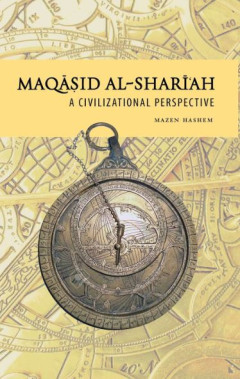
Maqasid Al-Shari\'ah: A Civilizational Perspective
The previous decade witnessed a plethora of books on the subject of maqasid (aims of Shariah), stressing that Islam’s commandments have overarching aims, and that the individual texts of Qur’an and hadith can only be adequality understood within the universal principles of Islam. While the classical work on maqasid is immense, that of Shatibi (d. 1388 C.E.) gained the utmost authority as it…

Education Transformation in Muslim Societies: A Discourse of Hope (Advancing …
In Education Transformation in Muslim Societies, scholars from around the world offer a wealth of perspectives for incorporating hope in the education of students from kindergarten through university to stimulate change, dialogue, and transformation in their communities. For instance, though progress has been made in Muslim societies on early education and girls\\\\\\\' enrollment, it is not we…

Economic doctrines of Islam : a study in the doctrines of Islam and their imp…
In this book, Dr. Irfan Ul Haq examines the primary sources of Islam to extract and formalize from them the Islamic economic doctrines as well as the sociopolitical framework which guides the development of society. In particular, emphasis is placed on the problems of poverty, unemployment and lack of human resource development. What the study suggests is that if Islam is properly studied throu…
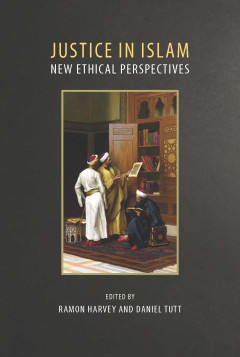
Justice in Islam : New Ethical Perspective
From its roots in the Qur’an and the life of the Prophet Muhammad (pbuh) to its branches in contemporary political and social movements, Islam has always been concerned with the question of social justice. The promise of a just order on earth has motivated both the reflections of the community of scholars and the actions of Muslims who have striven to realize it within their societies. Despit…
 Computer Science, Information & General Works
 Philosophy & Psychology
 Religion
 Social Sciences
 Language
 Pure Science
 Applied Sciences
 Art & Recreation
 Literature
 History & Geography